A sea turtle found barely alive on a beach in Wales has completed an extraordinary 5,000-mile journey to Texas, where veterinarians are working to prepare him for a possible return to the warm waters of the Gulf of Mexico. The endangered Kemp’s ridley sea turtle, named Rhossi, arrived at the Houston Zoo on August 10 after nearly two years of rehabilitation. His journey involved rescuers, veterinarians and wildlife organizations from both sides of the Atlantic, all working toward the same goal: giving him another chance to survive in the wild.
Although reaching Texas marked a major milestone, Rhossi’s recovery is not quite over. During his initial medical examination, veterinarians discovered signs of lingering pneumonia, which means he will need further treatment before he can be considered ready for release. The zoo’s veterinary team is monitoring his condition closely, with the aim of ensuring that he is strong and healthy enough to return to his natural environment without putting his survival at risk.
A Tiny Sea Turtle Discovered on a Beach in Wales
Rhossi’s story began in December 2023, when a local dog discovered an injured sea turtle on a beach in Wales. At the time, the animal weighed just two pounds and was thousands of miles away from the Gulf of Mexico, where Kemp’s ridley sea turtles normally live. His presence on a Welsh beach was highly unusual, but powerful ocean currents can sometimes carry sea turtles far beyond their normal range, leaving them stranded in waters that are far too cold for them to survive.
When Rhossi was found, he was suffering from cold-stunning, a dangerous condition that affects sea turtles exposed to extremely low water temperatures. Cold-stunned turtles can become weak, lose their ability to swim normally and struggle to breathe or move properly. Without timely intervention, the condition can be fatal. Following his rescue, Rhossi was taken to Anglesey Sea Zoo, where specialists began the lengthy process of rehabilitation and worked to restore his health.
The recovery took considerably longer than a typical wildlife rescue. Over the next two years, the turtle gradually regained his strength under the care of the Welsh rehabilitation team. His progress was reflected in his weight, which increased from just two pounds to approximately 46 pounds by the time he was ready to travel back to the United States. The transformation represented a major achievement for the people who had spent months caring for an animal that initially had little chance of surviving on its own.
A Helicopter Ride and Transatlantic Flight Bring Rhossi Home
Returning Rhossi to the United States required careful planning and cooperation between several wildlife organizations. The journey involved the U.S. Fish and Wildlife Service, NOAA, Anglesey Sea Zoo and the Texas State Aquarium, along with Welsh helicopter pilot Darren Briggs, who helped transport the turtle from Wales to London. From there, Rhossi continued his journey across the Atlantic before finally reaching Houston, where the Houston Zoo took responsibility for his veterinary care.
Transporting an endangered sea turtle over such a long distance requires more than simply arranging a flight. Animal specialists must consider temperature, handling, stress and the turtle’s medical condition throughout the journey. After spending nearly two years recovering in Wales, Rhossi had become strong enough to make the trip, but his arrival in Texas did not automatically mean he could be released. Veterinary specialists still needed to evaluate his health and determine whether he could safely adapt to life in the Gulf of Mexico.
The successful transfer marked the end of one major stage of the rescue operation and the beginning of another. Organizations from two countries had coordinated their efforts to bring an endangered animal back toward its native habitat, demonstrating how international cooperation can support wildlife rescue and conservation. For Rhossi, the most important part of the journey is still ahead: recovering completely and eventually returning to open water.
Houston Zoo Veterinarians Find Signs of Pneumonia
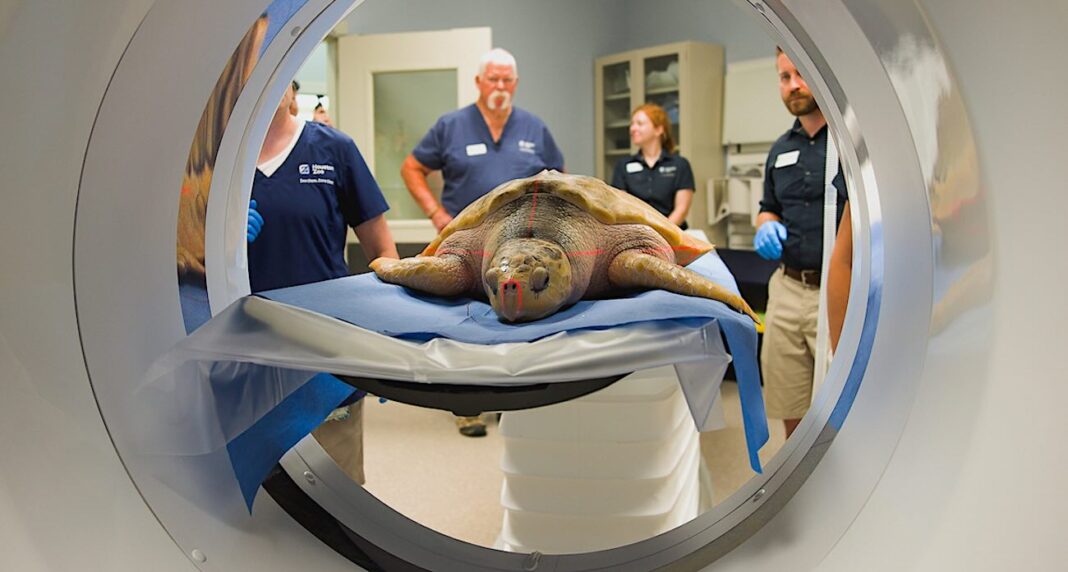
After arriving in Houston on August 10, Rhossi underwent a comprehensive medical examination by the Houston Zoo’s veterinary team. Specialists checked his major organs, eyes, mouth, shell and flippers to assess his overall condition. They also performed X-rays and a CT scan to examine his lungs more closely, looking for any medical problems that could affect his ability to survive after release. The tests revealed signs of lingering pneumonia, meaning the turtle will need additional treatment and monitoring.
The examination also involved senior veterinarian Dr. Joe Flanagan, who briefly came out of retirement to help care for Rhossi. Despite the discovery of pneumonia, the zoo’s veterinary team described the turtle as healthy, active and vigorous overall. His condition is encouraging, particularly considering the circumstances in which he was originally discovered, but the remaining respiratory problem needs to be addressed before specialists can make a decision about his future.
The Houston Zoo has made clear that Rhossi’s release will depend on his medical progress rather than a predetermined timetable. Veterinarians want to ensure he has the best possible chance of surviving independently once he returns to the wild. Releasing a recovering sea turtle too early could put years of rehabilitation at risk, so the team is taking the time necessary to assess his recovery and provide any additional care he needs.
Why Kemp’s Ridley Sea Turtles Are Among the Most Endangered
Kemp’s ridley sea turtles are considered the most endangered species of sea turtle in the world. Native primarily to the Gulf of Mexico and the western North Atlantic, they face several threats, including accidental capture in fishing equipment, coastal development, habitat degradation and marine pollution. Their populations have experienced dramatic declines in the past, making conservation programs and rehabilitation efforts particularly important for the species’ long-term survival.
One of the major challenges for sea turtles is their vulnerability to unusual environmental conditions. Although they are adapted to life in warm marine waters, ocean currents can occasionally carry individual turtles far beyond their usual habitat. When they reach colder regions, they can suffer from cold-stunning and become stranded along coastlines. Cases like Rhossi’s demonstrate why early rescue efforts and specialized veterinary treatment can make a difference, especially when an animal is discovered far from the environment it needs to survive.
Wildlife rehabilitation also depends on cooperation between organizations with different areas of expertise. In Rhossi’s case, rescuers in Wales provided long-term care, transportation specialists helped organize his return, and American veterinary teams took over his treatment after arrival. The operation required time, resources and coordination across international borders, but it has given the turtle an opportunity to return to the Gulf of Mexico after an unlikely journey across the Atlantic.
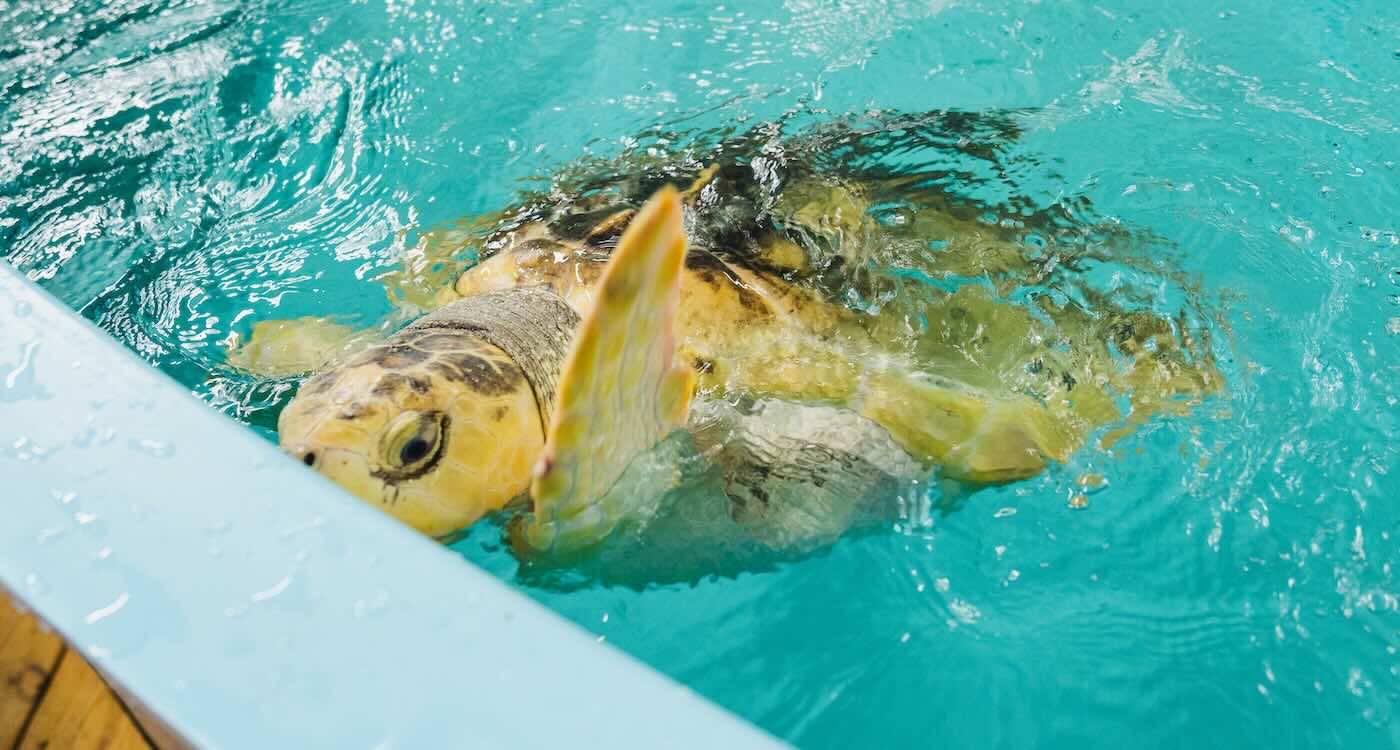
For now, Rhossi remains under veterinary supervision in Houston while specialists continue treating his pneumonia and evaluating his recovery. His eventual release will depend on whether his lungs have recovered sufficiently and whether the medical team believes he can survive without human assistance. After spending almost two years in rehabilitation and traveling thousands of miles to reach Texas, the turtle is considerably closer to his natural habitat than when he was discovered on that Welsh beach.
The Houston Zoo also supports sea turtle rescue and rehabilitation through its conservation work, with a portion of admission ticket revenue contributing to these efforts. Rhossi’s story is a reminder of the work involved in protecting endangered marine wildlife, but it also shows what can happen when rescuers, veterinarians and conservation organizations work together. His return to the Gulf may take a little longer, but the goal remains the same: making sure he gets there healthy enough to live in the wild.