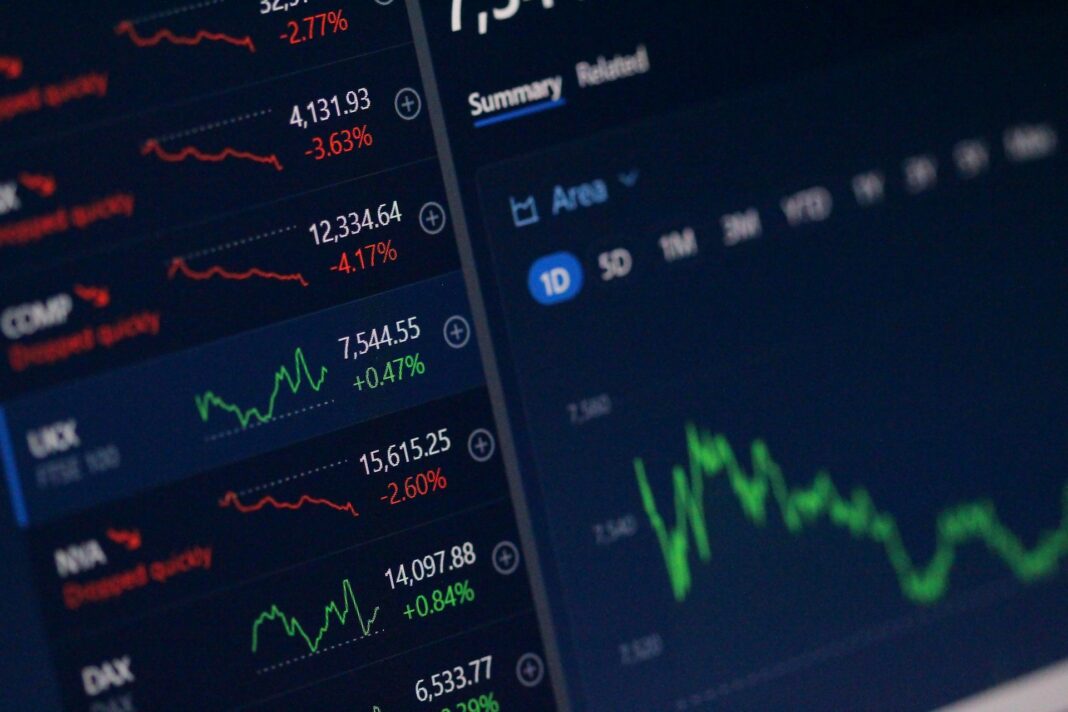
Citigroup is revising its investment strategy following a period of increased volatility across global financial markets. The bank has downgraded its outlook for US equities and the global technology sector to Neutral, while upgrading European stocks, excluding the UK, to Overweight. The changes reflect a reassessment of regional market exposure and the risks associated with the recent technology sell-off. Investors have become increasingly cautious about the valuations of major technology companies, particularly those benefiting from the rapid expansion of Artificial Intelligence. Citi’s latest positioning signals a more selective approach to equity markets heading into 2027.
The decision follows a turbulent week on Wall Street, as concerns over tighter AI regulations contributed to widespread selling across technology stocks. The Nasdaq 100 lost approximately $2.3 trillion in market value during Thursday’s trading session alone. Meanwhile, the S&P 500 recorded its largest weekly decline since April 2025. European markets showed greater resilience, with the Stoxx 600 finishing the week 0.2% higher. The contrasting performance highlighted the different levels of exposure between American and European equity markets during the latest market correction.
Citi’s equity strategy team, led by Beata Manthey, formally downgraded US equities and the global technology sector to Neutral. At the same time, European equities outside the UK received an Overweight rating. According to the analysts, Europe’s market structure offers greater diversification and less dependence on companies associated with AI development. The region has significant exposure to industrial businesses, banks and defence companies. Citi believes this composition makes European equities relatively attractive in the current market environment.
Another factor highlighted in the broader market outlook is the potential benefit of lower oil prices for European businesses. Reduced energy costs could improve corporate margins and provide additional support for economic activity. Citi, however, continues to maintain a positive long-term view of Artificial Intelligence. Its strategists acknowledge that the technology has considerable growth potential, but believe technology shares could face further pressure before valuations become more attractive. Stronger corporate earnings will be important in determining whether current investment levels can be justified.
Beata Manthey has also warned Citi clients that investor positioning in major indices, including the Nasdaq, could become increasingly negative. According to her assessment, some positions could eventually move into net-short territory. She also noted that market volatility has expanded beyond technology stocks, affecting a wider section of the equity market. This suggests that the current uncertainty is not limited to a single industry. Investors are increasingly reassessing their exposure to equities as market conditions become less predictable.
Europe’s Lower AI Exposure Could Become a Competitive Advantage
Goldman Sachs analysts have also highlighted Europe’s relatively limited exposure to AI-related investments. As reported by Bloomberg, they believe this difference could work in Europe’s favour as investors reassess their portfolios. While American markets have benefited significantly from the rapid growth of major technology companies, European equities have followed a more diversified path. This has resulted in less dependence on a small group of companies for overall market performance. The difference could become particularly relevant if investor enthusiasm for AI continues to weaken.
According to the figures cited by Goldman Sachs, AI infrastructure-related companies represent approximately 15% of the Stoxx 600. These businesses are expected to contribute less than one-quarter of the index’s projected 9% earnings growth in 2027. In comparison, similar companies account for approximately 40% of the S&P 500. They are also expected to generate more than two-thirds of the index’s projected earnings growth next year. These figures illustrate the substantial difference in sector concentration between European and American markets.
Goldman Sachs also pointed to historical market performance to support its assessment. According to the bank’s analysis, European equities outperformed their US counterparts during all eight of the largest AI-related market sell-offs since 2023. This historical pattern suggests that Europe’s lower exposure to technology-related investments has provided a degree of protection during previous corrections. However, past performance does not guarantee that the same outcome will occur during future market downturns. The figures nevertheless offer useful context when comparing the risk profiles of the two regions.
Citi Shifts Towards Cyclical and Defensive Investments
Beyond its regional allocation changes, Citi has also adjusted its preferred sector exposure. The bank is adopting a barbell investment strategy, combining cyclical businesses with more defensive sectors. This approach is designed to balance potential gains from stronger economic activity with exposure to companies that may remain more resilient during uncertain periods. Cyclical businesses typically benefit from improving economic conditions and stronger demand. Defence-related companies, meanwhile, may attract investor interest amid geopolitical tensions and increased government spending.
Healthcare has also become one of Citi’s preferred sectors following an upgrade to Overweight. The sector joins basic materials, which were already among the bank’s preferred investment areas. This adjustment reflects Citi’s broader effort to diversify its sector positioning beyond technology-related investments. Healthcare companies offer different earnings drivers, while basic materials can benefit from industrial demand and infrastructure spending. Together, these sectors form part of the bank’s updated investment approach.
Despite the recent market turbulence, Citi maintains a positive medium-term outlook for global equities heading into 2027. The bank identifies lower interest rates, resilient economic data and the possibility of easing geopolitical tensions as potential sources of support for financial markets. These factors could help improve investor confidence and create more favourable conditions for equities. However, the outlook remains dependent on how economic conditions and corporate earnings develop. For investors, the latest strategy changes highlight the importance of diversification and a more balanced approach to regional and sector exposure.
Investment Risk Disclaimer
This article is intended for informational and educational purposes only and should not be considered financial, investment or trading advice. The views and market assessments discussed are based on publicly available information and may change as market conditions evolve. Investing in financial markets involves risks, including the potential loss of some or all of your invested capital. Past performance is not a reliable indicator of future results. Readers should conduct their own research and consult a qualified financial adviser before making any investment decisions.