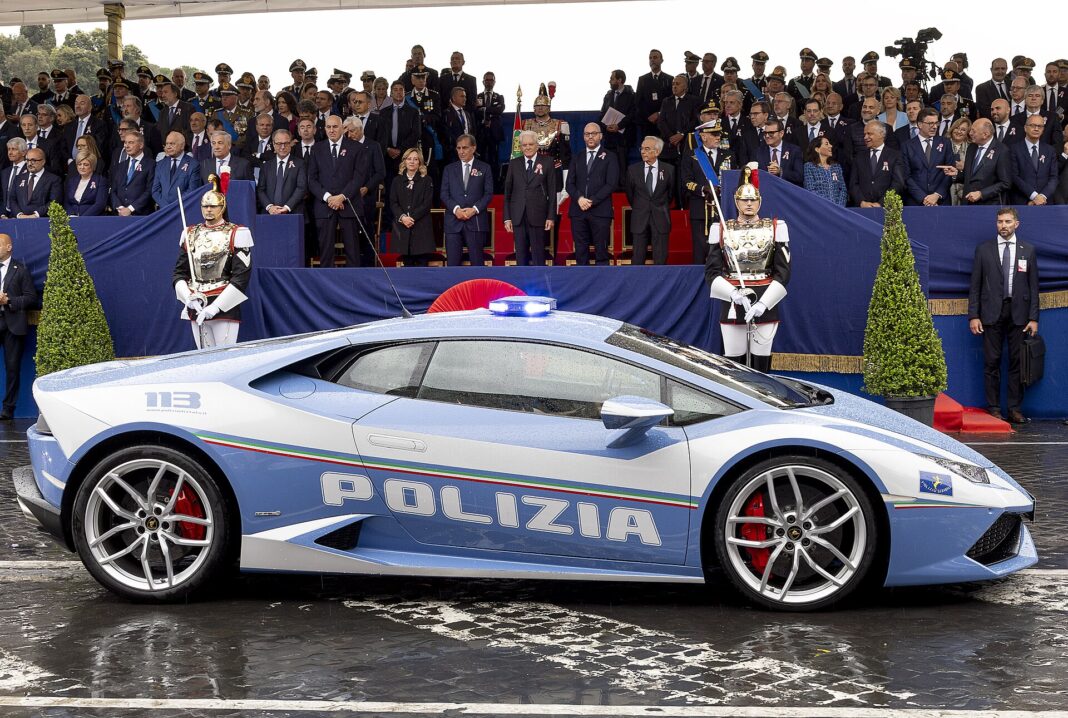
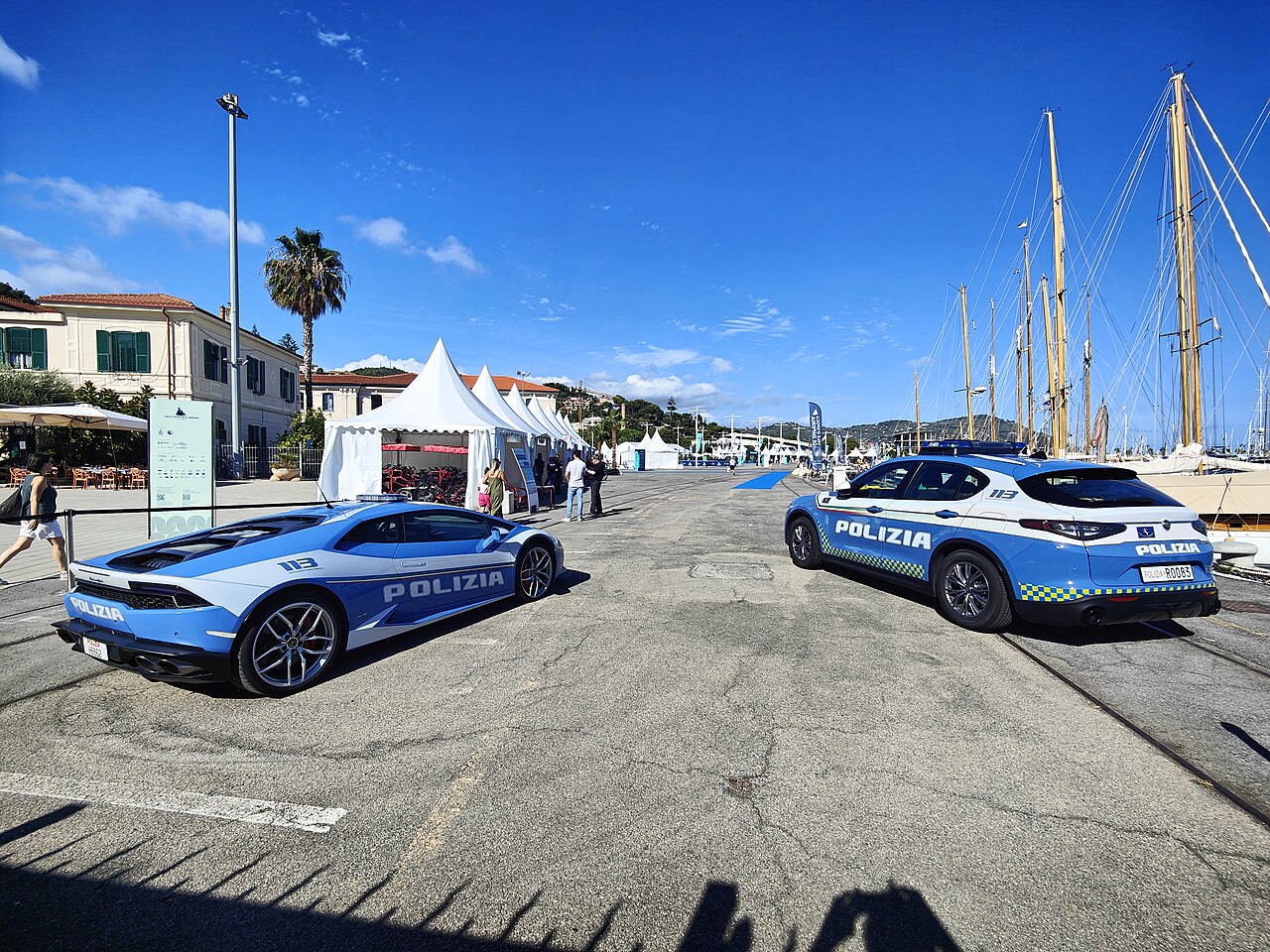
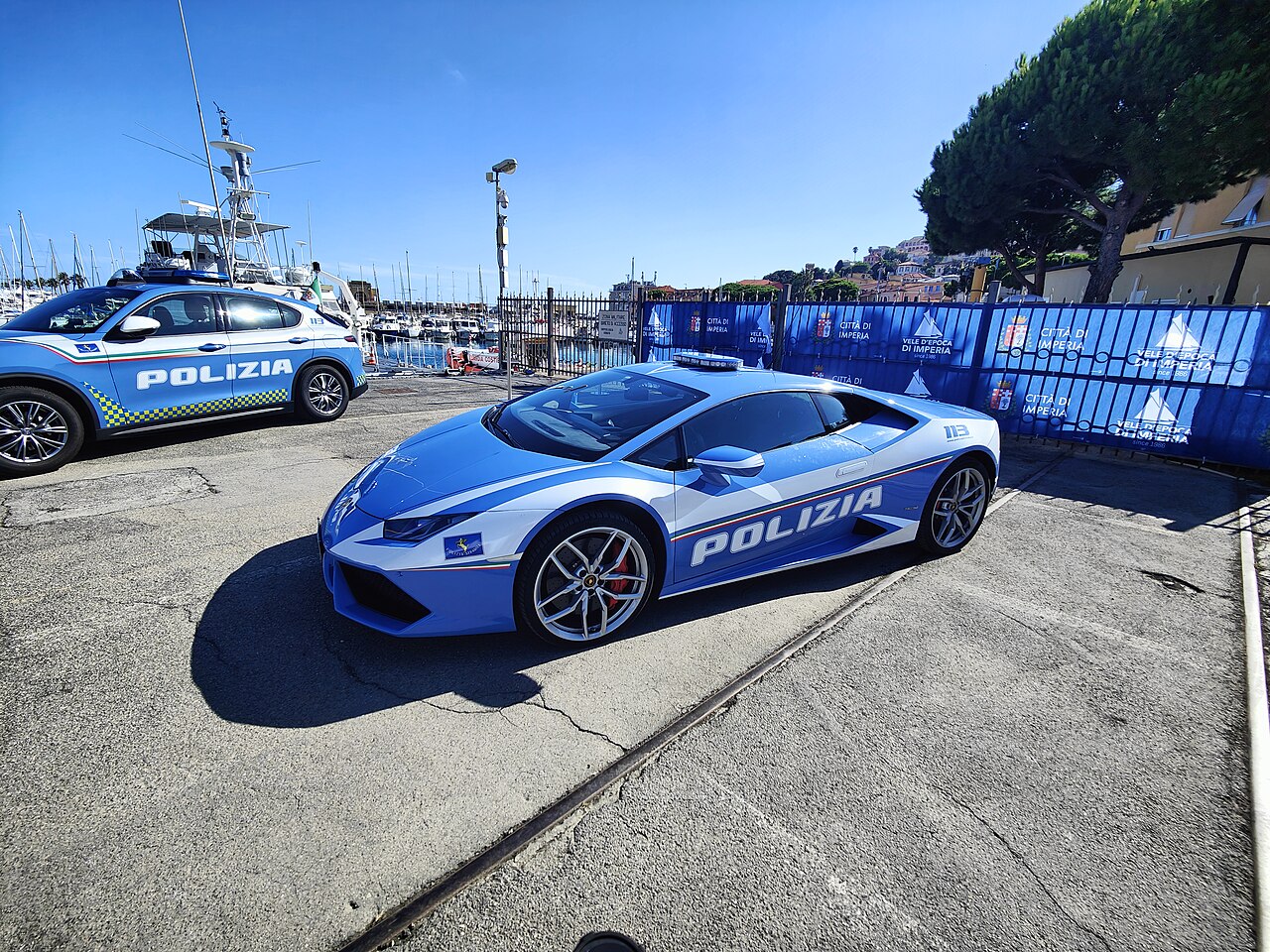
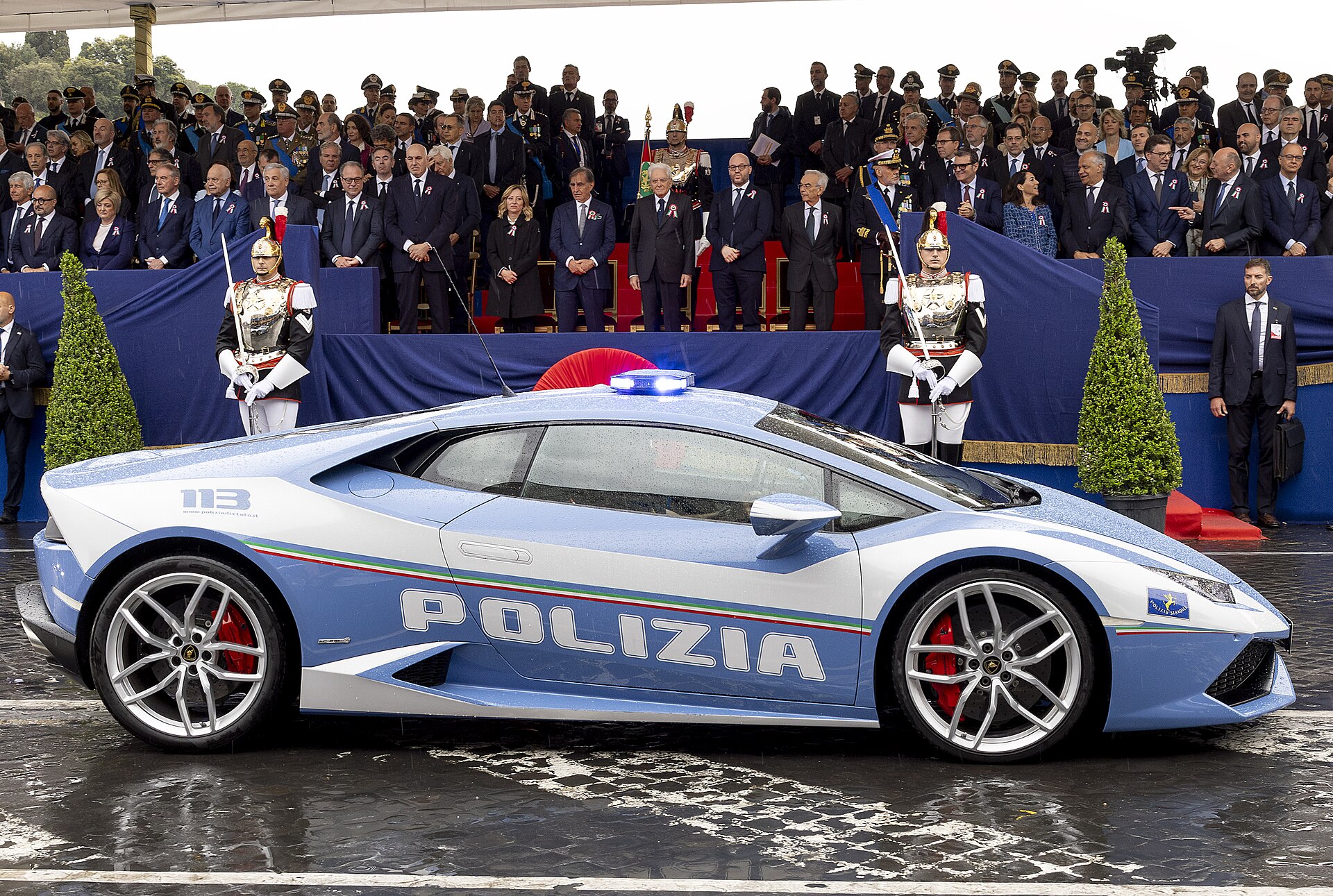
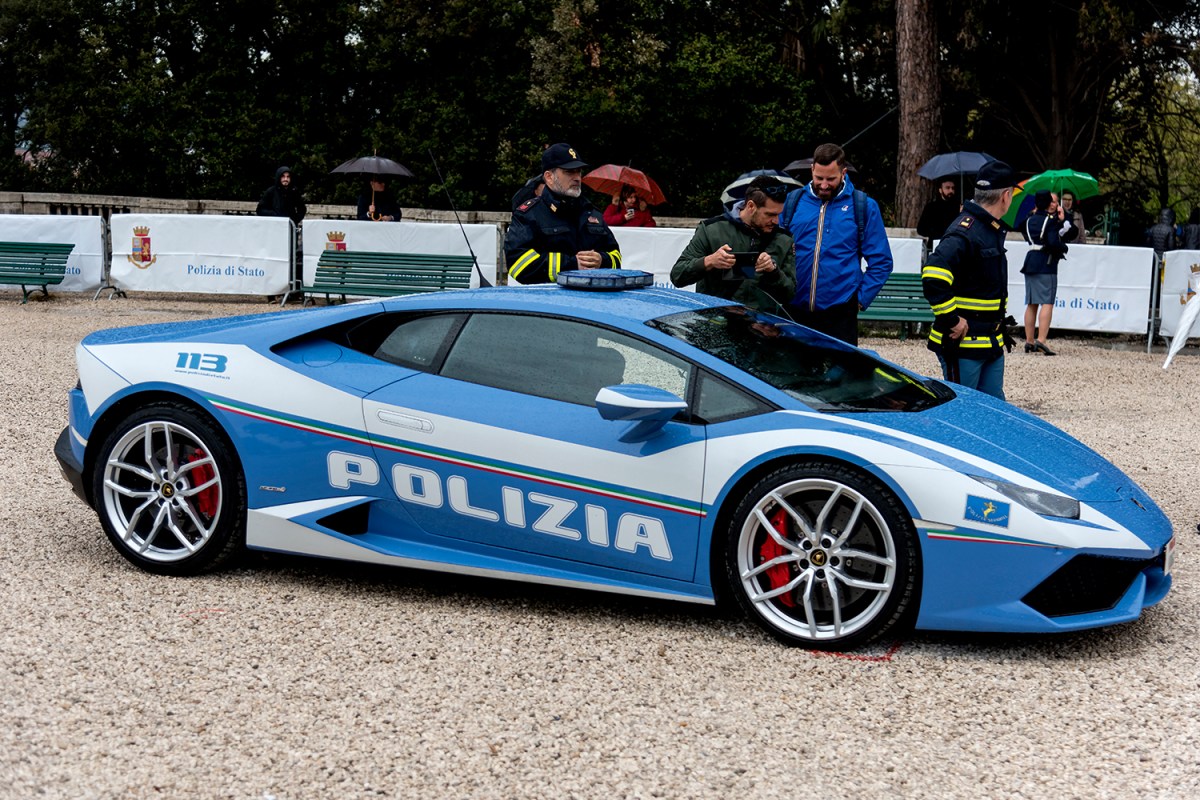
Most Lamborghini Huracan’s spend their lives doing relatively little driving. They are bought for their performance, dramatic styling and the experience of owning an Italian supercar, with many examples covering only a few thousand kilometers each year. One particular Huracan, however, has followed a very different path. Wearing the blue-and-white colors of the Italian State Police, this V10-powered supercar has reportedly covered 377,034 kilometers, a figure more commonly associated with a hard-working diesel sedan than a machine capable of reaching 325 km/h.
The remarkable mileage became public after a photograph of the car’s instrument display was shared online by Helen Wakerley in October 2026. The odometer showed exactly 377,034 km on October 4, making the police Lamborghini one of the most remarkable high-mileage examples of the Huracan reported to date. There is no official worldwide database tracking the mileage of every Huracan, so it would be difficult to establish whether this is definitively the highest-mileage example in existence. Nevertheless, the figure is extraordinary for a modern supercar, particularly one that has spent years in operational service rather than being driven occasionally by a private owner.
What makes the story even more interesting is the car’s working life. This Lamborghini was not purchased simply to attract attention at public events or sit in a collection. It has been part of a specialized police fleet, where high performance has a practical purpose, including the urgent transportation of organs and medical supplies. Its 377,034 kilometers represent a very different kind of supercar ownership, one measured not in weekend drives or track days but in years of public service.
A Lamborghini Huracan Built for More Than Speed
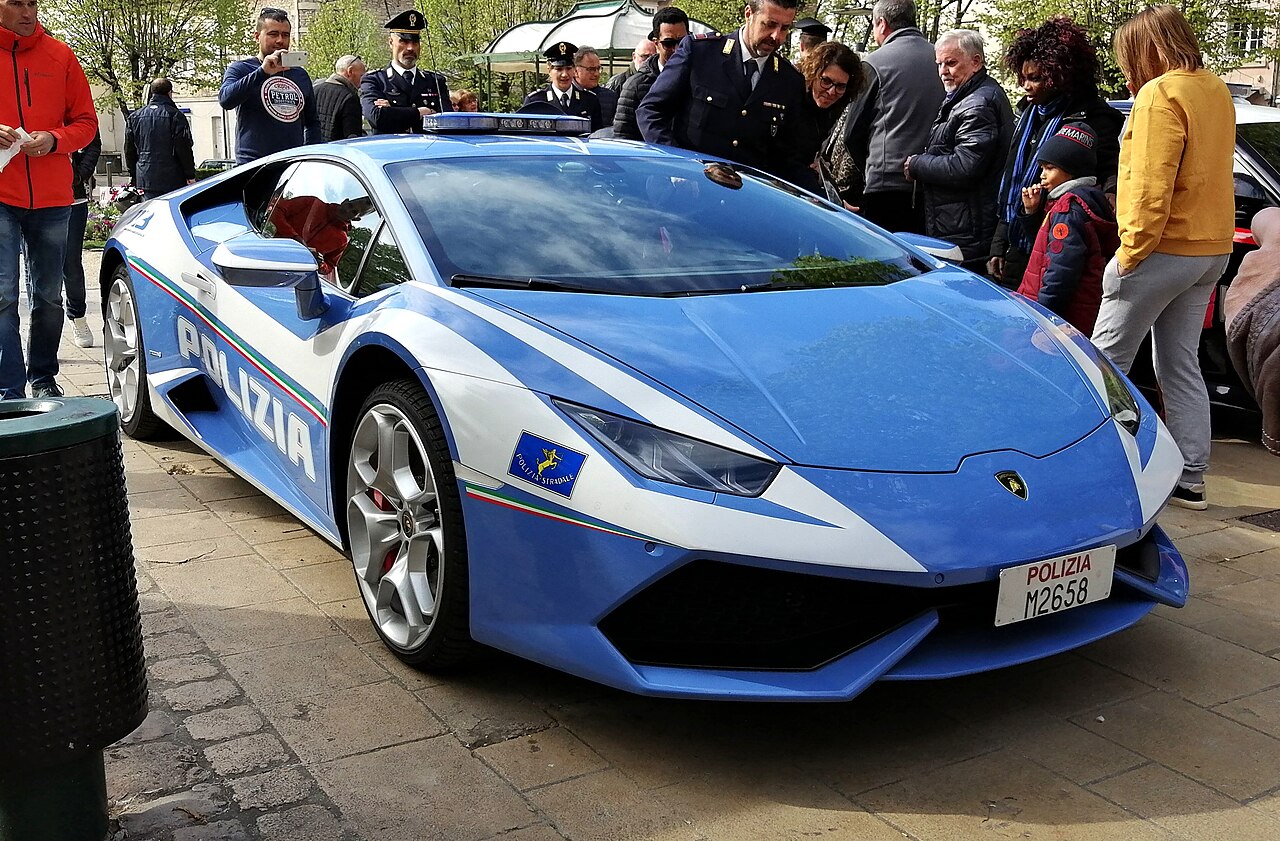
The police car is a Lamborghini Huracan LP 610-4, a model introduced as part of the first generation of the Italian manufacturer’s V10-powered supercar. Behind its aggressive exterior sits a naturally aspirated 5.2-liter V10 producing 610 horsepower. Unlike many modern performance engines that use turbochargers to generate additional power, the Huracan’s V10 delivers its performance through a high-revving naturally aspirated design, one of the characteristics that helped make the model particularly popular among enthusiasts.
Power is sent to all four wheels through a seven-speed dual-clutch transmission and Lamborghini’s all-wheel-drive system. The combination allows the LP 610-4 to accelerate from 0 to 100 km/h in approximately 3.2 seconds, while its maximum speed is around 325 km/h. Those numbers put it firmly in supercar territory, although the Italian police version has a very different job from the privately owned examples normally associated with the Huracan name.
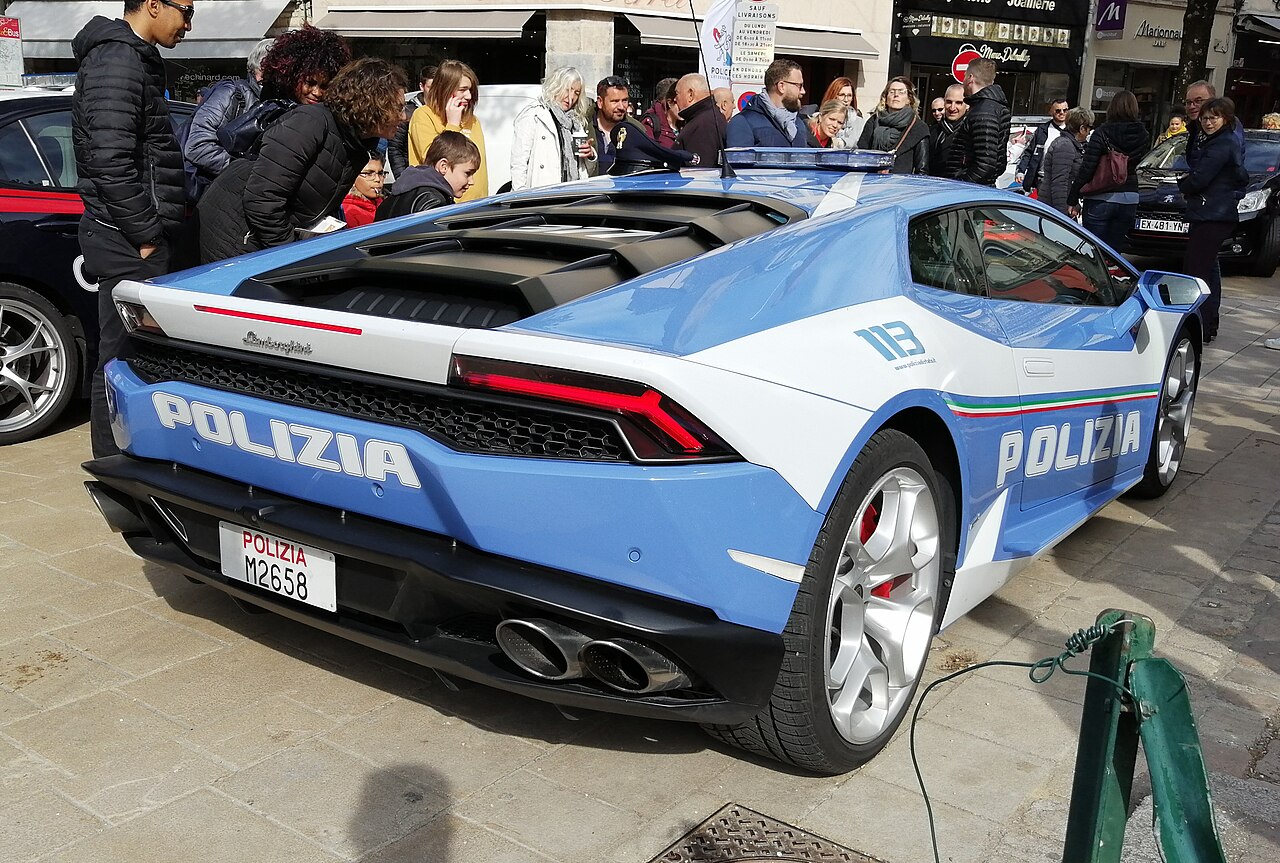
The vehicle is equipped for police duties, including emergency lighting and communication equipment, as well as specialized arrangements for transporting medical materials. Its performance can be useful when urgent deliveries need to cover long distances, but speed alone is not what makes the car suitable for these missions. Reliability, coordination with medical teams and the ability to reach the destination safely are equally important.
Why the Italian Police Uses Lamborghini Supercars
The relationship between Lamborghini and Italy’s State Police goes back many years. The partnership began in 2004 and has produced several specially equipped vehicles used for selected police activities. The Huracan became one of the most recognizable examples, partly because of its unmistakable appearance but also because it has been involved in missions where a fast response can make a real difference.
One of the most important responsibilities of these vehicles is the transportation of organs for transplantation. In situations where a suitable organ must be moved quickly between hospitals, time and coordination are critical. A police supercar can help cover long distances rapidly, with officers coordinating the journey and working alongside the medical authorities responsible for the transplant.
The role is not merely theoretical. In December 2022, a police Huracan was used to transport two kidneys during an urgent journey from northern Italy. The vehicle travelled from Padua to Modena, where the first organ was delivered, before continuing to Rome with the second. The total journey covered approximately 570 kilometers. It is an unusual assignment for a Lamborghini, but it illustrates why the Italian authorities have maintained a relationship with the manufacturer beyond the publicity associated with having a supercar in the police fleet.
Over the years, the partnership has involved more than just organ transportation. The vehicles have also supported the movement of medical supplies and other specialized operational duties. Their use is carefully coordinated, and the presence of a powerful engine does not mean that they operate outside normal safety and emergency procedures. In this context, the Huracan’s performance is a working tool rather than simply a headline figure.
377,034 Kilometers and the Question of Engine Reliability
The most fascinating part of this story is arguably the distance covered by the naturally aspirated V10. A Lamborghini engine producing 610 horsepower is designed to deliver serious performance, but seeing one of these cars accumulate more than 377,000 kilometers is far outside what most people would expect from a supercar. The figure naturally raises questions about the engine, transmission and maintenance required to keep the vehicle in service for so long.
There is an important detail concerning the car’s mechanical condition. Earlier reports, published when the Huracan had covered approximately 335,554 kilometers, stated that it was still using its original engine and transmission. That was already an impressive achievement for a vehicle of this type. However, the later odometer photograph showing 377,034 kilometers does not, by itself, confirm whether those same components remained in place at the higher mileage. Without updated confirmation from the Italian police or the manufacturer, it would be inaccurate to state that the engine and gearbox are definitely original at 377,034 km.
Even with that distinction, the mileage remains remarkable. A police vehicle has a very different maintenance environment from a privately owned supercar. It is operated by a professional organization, receives scheduled inspections and is maintained by specialists familiar with its mechanical systems. Its service history may also include repairs or component replacements that are not visible from an odometer photograph. High mileage alone cannot tell the complete story of a vehicle’s mechanical condition, but it does show just how intensively this particular Huracan has been used.
The example also challenges the assumption that high-performance cars are automatically unsuitable for frequent use. Modern supercars are complex machines, and their maintenance can be expensive, but that does not necessarily mean they cannot cover substantial distances. The condition of the individual vehicle, its servicing history and the way it is operated all matter. The Italian police Huracan is an unusual case, not proof that every V10 Lamborghini will achieve similar mileage without major mechanical work.
What Does It Cost to Maintain a Lamborghini Huracan?
The Huracan’s impressive mileage also brings up a question that many enthusiasts and potential buyers will have: how much does it cost to keep a Lamborghini running over hundreds of thousands of kilometers? The answer is considerably different from the ownership costs associated with an ordinary family car. Even routine maintenance can be expensive because the vehicle uses specialized components and requires technicians familiar with high-performance machinery.
Regular servicing involves more than simply changing engine oil. The cooling system, transmission, brakes, suspension and electronic systems all need to be inspected according to the manufacturer’s maintenance requirements. High-performance tires are another significant expense, particularly on a car capable of reaching speeds above 300 km/h. Depending on how the vehicle is used, brake components and other wear items can also require replacement more frequently than they would on a conventional passenger car.
For anyone considering a used Lamborghini Huracan, a detailed service history should be one of the first things to examine. A car with higher mileage and documented specialist maintenance may be a more convincing purchase than a low-mileage example with missing records or a history of neglect. Buyers should also arrange an inspection by a qualified Lamborghini specialist before making a decision, since repairs involving the engine, transmission or advanced electronic systems can become extremely expensive.
The police Huracan is not a realistic comparison for the average private owner. Its maintenance is handled within a professional fleet environment, and its operational requirements are very different from those of a privately owned vehicle. Still, its story is a useful reminder that the number on the odometer should never be considered in isolation from the vehicle’s history and maintenance.
Could This Be the Highest-Mileage Lamborghini Huracan?
With 377,034 kilometers showing on its odometer, the Italian police Huracan has attracted attention as a possible record-setting example. It is certainly among the highest-mileage Huracan’s reported publicly, but there is currently no comprehensive official register that records and verifies the mileage of every example around the world. Other cars may have covered similar distances without their owners ever making the figures public.
The October 2026 photograph provides a specific and impressive mileage figure, but it does not establish a certified world record. There is also a difference between a vehicle’s displayed mileage and a complete, independently verified service history. For that reason, describing it as one of the highest-mileage Huracan’s known is more accurate than claiming that it is unquestionably the highest-mileage Lamborghini of its kind.
Regardless of whether another example has covered more distance, the Italian police car has an unusual history that makes it stand out. Its mileage is the result of years of operational use, including duties that have helped transport essential medical materials. That gives the story a little more significance than an ordinary supercar mileage record.
The Huracan Makes Way for a New Police Lamborghini
The partnership between Lamborghini and the Italian State Police is continuing, although the Huracan’s era is gradually coming to an end. The newer Lamborghini Temerario has been introduced as its successor in the police fleet, bringing a very different powertrain and a new generation of performance technology. Instead of the naturally aspirated V10, the Temerario uses a twin-turbocharged 4.0-liter V8 combined with electric motors to produce a total of 920 horsepower.
The new model can reach a claimed maximum speed of 343 km/h, making it even more powerful than the Huracan it succeeds. Its arrival marks an important change for Lamborghini, as the company moves away from the naturally aspirated V10 configuration that helped define the Huracan. For enthusiasts who appreciate the sound and character of a high-revving V10, the older police car is therefore an especially memorable part of the manufacturer’s history.
Whether the Temerario will eventually accumulate the same extraordinary mileage remains to be seen. What is already clear is that the Huracan has set an unusual benchmark for a vehicle of its kind. Covering 377,034 kilometers in police service is an achievement that few supercars are ever likely to match, regardless of how impressive their performance figures may be.
For a Lamborghini, the odometer reading is almost as surprising as the 610 horsepower produced by its V10 engine. But perhaps the most interesting part of the story is what those kilometers represent: a supercar that spent years doing a job very different from the one most people associate with the Lamborghini badge.