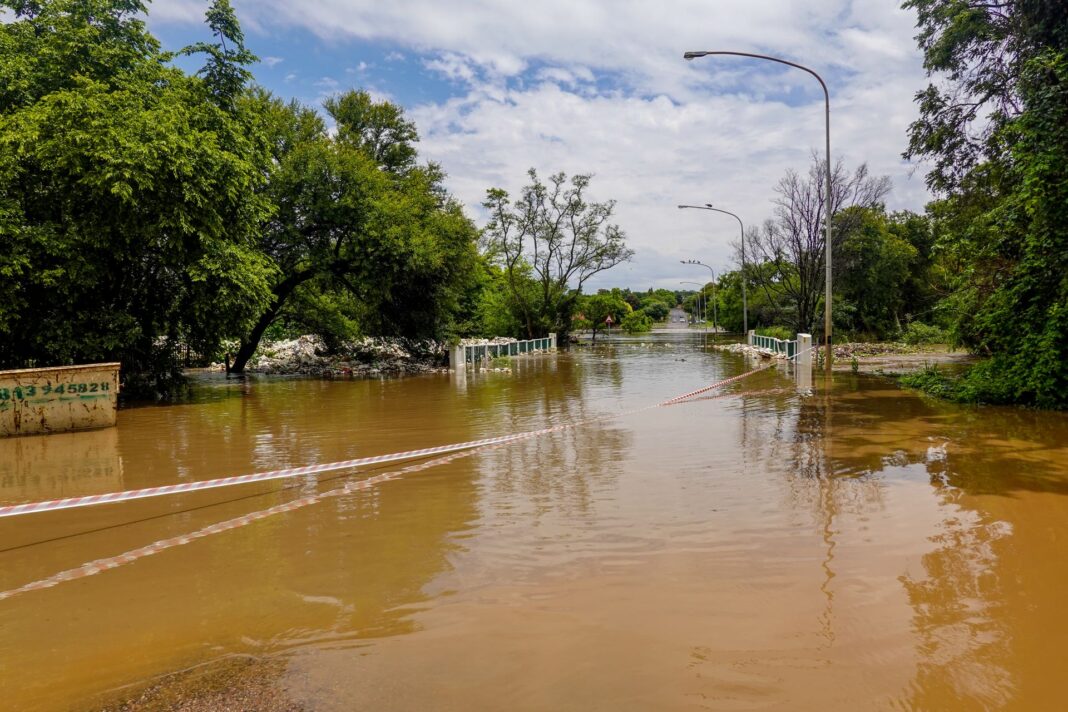
Heavy rain has caused widespread flooding across southwestern Colorado, forcing evacuations, closing roads and raising concerns about damage to homes and businesses. Pagosa Springs has been one of the areas facing the greatest uncertainty, as the San Juan River rose to levels that had not been seen in more than a century. Although the river eventually fell short of the most severe forecasts, residents in low-lying areas still faced flooded properties, disrupted travel and the possibility of further problems as emergency crews monitored conditions.
The flooding has affected more than one community. Parts of the Four Corners region, including Colorado, New Mexico, Utah and Arizona, have also dealt with heavy rainfall, rising waterways and emergency response operations. Some roads and bridges have been damaged, while residents in vulnerable neighborhoods have been told to leave their homes. Even where water levels have started to fall, officials are warning people not to assume the danger is over.
Pagosa Springs Watches the San Juan River
Pagosa Springs, in Archuleta County, became a major concern as the San Juan River continued to rise following days of rain. The river runs through the community, where homes, businesses and roads in lower-lying areas can be exposed when water levels climb. Local authorities prepared for the possibility of serious flooding after the National Weather Service warned that the river could reach about 22 feet.
That forecast was especially alarming because the projected level was well above the historic flood crest of 17.8 feet recorded in 1911. Officials issued mandatory evacuation orders for properties considered at risk, particularly along the San Juan River and in nearby low-lying areas. Residents were urged to take the warnings seriously rather than wait until floodwater reached their streets or homes.
The river ultimately reached about 16.81 feet late Sunday night before beginning to recede, according to figures reported by the Associated Press on Monday. That was considerably lower than the forecast peak, but it did not mean the flooding had caused no damage. Water levels can vary across different parts of a river system, and properties can still be affected even when a river does not reach its projected worst-case level.
For people living near the river, the immediate concern has shifted from watching the water rise to dealing with the effects of the flooding. Roads may remain closed, access to properties can be limited and residents may need to wait for authorities to determine when it is safe to return. Officials are continuing to monitor conditions as the region moves through the recovery process.
Flooding Closes Roads and Disrupts Communities
Floodwater has caused transportation problems across southwestern Colorado, with some roads and bridges damaged or left unsafe for travel. In La Plata County, officials reported widespread flooding and bridge damage, while several roads remained closed on Monday. Residents near the Animas River were also evacuated as rising water created dangerous conditions in areas close to the river.
Pagosa Springs has faced similar disruption, with closures affecting access to parts of the community. When roads become impassable, even routine trips can turn into a problem. Residents may struggle to get to work, reach medical appointments or pick up essential supplies, while emergency crews have to deal with fewer safe routes through affected areas.
Local businesses can also feel the impact long after the rain stops. Hotels, restaurants, shops and other companies that depend on visitors may lose bookings and customers when roads are closed or travel becomes difficult. Businesses located near flooded areas could face additional costs if water damages buildings, equipment or stock. For communities that rely heavily on tourism, even a temporary disruption can affect income during an important part of the season.
Authorities have urged drivers to stay away from flooded roads and never attempt to cross moving water. Floodwater can conceal damaged pavement, debris and washed-out sections of a road, making it difficult to judge the actual danger. Residents who have been ordered to evacuate should also follow official instructions, since waiting too long can leave them with fewer safe ways to get out.
Heavy Rain Brings Flooding to Other Southwestern States
The problems in Colorado are part of a larger period of severe weather across the Southwest. Heavy rainfall over the weekend triggered flash flooding and evacuation orders in parts of New Mexico, Utah and Arizona, according to the Associated Press. The National Weather Service warned that additional rain could fall through Monday as several Pacific storm systems moved across the region.
In Arizona, flooding affected areas including Sedona, Flagstaff and Tucson. Rising water along Oak Creek in Sedona prompted evacuations, and emergency crews carried out rescues involving people trapped by floodwater. Parts of northern New Mexico also reported rising rivers and new evacuation orders, as communities downstream watched water move through regional waterways.
The risk increases when heavy rain falls on ground that is already saturated. Instead of soaking into the soil, much of the additional water runs across the surface and flows into nearby creeks and rivers. That runoff can cause water levels to rise quickly, sometimes leaving people with little time to prepare. Flash flooding is particularly dangerous because conditions can change rapidly, even in places that are not experiencing heavy rain at that exact moment.
The region’s mountainous landscape adds another challenge. Water can move rapidly through steep valleys and narrow drainage areas, carrying mud, rocks and debris toward roads and developed areas. A route that appears passable at one moment may become dangerous soon afterward, which is why officials continue to advise against unnecessary travel in affected areas.
What Flood Damage Could Mean for Homeowners
As residents begin assessing the situation, attention will also turn to the cost of repairing flood-damaged properties. Water inside a home can ruin flooring, furniture, appliances, insulation and electrical equipment. If moisture remains trapped inside walls or other building materials, it can also lead to mold growth and further repair expenses. The final cost depends on how much water entered the property, how long it remained there and how quickly cleanup and drying work can begin.
Homeowners may have to pay for water removal, damaged belongings, repairs and temporary accommodation if their properties cannot be occupied. Businesses face similar risks when floodwater reaches commercial buildings, storage areas, machinery or inventory. Even properties that appear to have suffered only minor damage may need professional inspection, particularly if water has reached electrical systems or hidden parts of the building.
Insurance coverage is another issue that can catch property owners by surprise. A standard homeowners insurance policy generally does not cover flooding caused by rising rivers or surface water. Some forms of water damage may be covered under a regular policy, but flood damage is usually treated separately. That distinction matters because homeowners may discover after a disaster that their policy does not cover the repairs they expected it to pay for.
The National Flood Insurance Program, administered by FEMA, offers flood insurance to eligible homeowners, renters and businesses in participating communities. Private flood insurance is also available in some areas. Policies differ in their coverage limits, deductibles and exclusions, so property owners should read the details carefully and check what protection they actually have before a storm occurs.
Flood risk is not limited to houses directly beside a river. Heavy rainfall, overwhelmed drainage systems and runoff from nearby hills can send water into neighborhoods that residents may not consider particularly vulnerable. The flooding in southwestern Colorado is a reminder that property owners should understand their local risks and review their insurance coverage before they need to file a claim.
Officials Continue to Monitor Conditions
Although the San Juan River has started to fall from its peak, emergency officials still have to assess conditions across affected communities. Damaged roads and bridges may take time to inspect and repair, and residents may not be able to return to evacuated properties until authorities determine that access is safe. Cleanup could also take longer in areas where floodwater has left behind mud, debris or damage to public infrastructure.
For now, residents are being asked to follow local emergency updates, respect road closures and avoid flooded areas. The immediate focus is on keeping people safe while communities begin dealing with the damage. The full financial and infrastructure impact of the flooding may become clearer only after water levels have receded and inspections are completed.