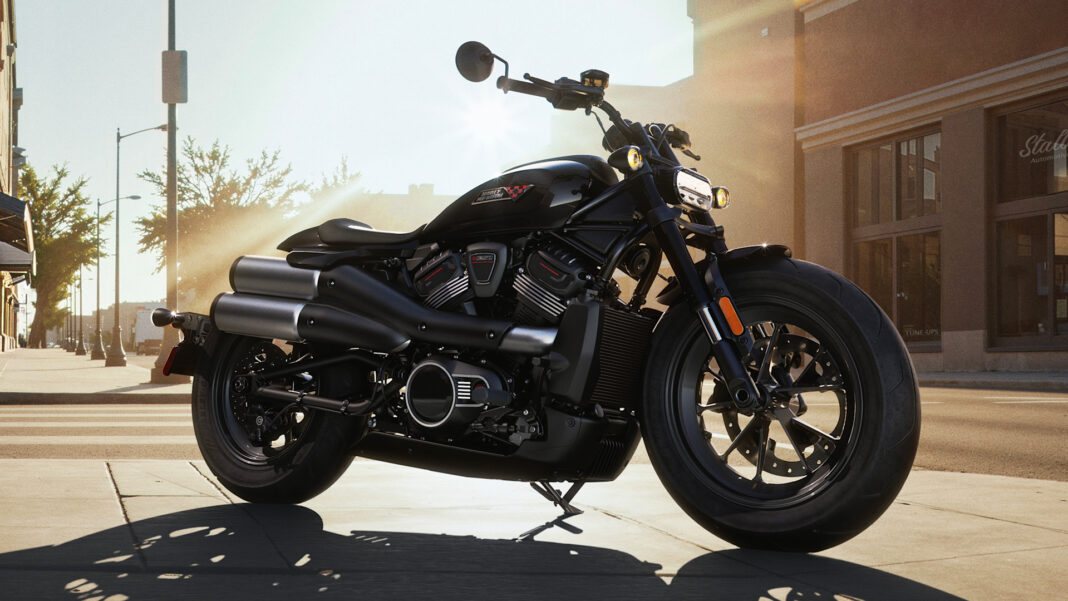
Harley-Davidson introduces the new Sportster S, a motorcycle that represents a radical departure from the traditional Sportster family. The letter “S” identifies it as the flagship of the new generation, with additional models expected to join the lineup in the near future.
The new Sportster S was scheduled to arrive in Switzerland in autumn 2021, with prices starting at 17,850 Swiss francs. Our first opportunity to ride it came in Essen, Germany, where the motorcycle left a particularly positive impression.
At first glance, it is difficult to find any real resemblance between the new model and its predecessors, the Sportster 883 and 1200, which had been part of Harley-Davidson’s range until recently. The transformation goes far beyond styling. This is an entirely new motorcycle, marking the beginning of a different chapter for one of the brand’s most recognisable model families.
It is worth noting that the previous Sportster models remain available in the United States, where they are now classified as cruisers. In Europe, however, they were discontinued because Harley-Davidson chose not to upgrade them to meet the Euro 5 emissions regulations.
Revolution Max 1250T: A Different Kind of V-Twin
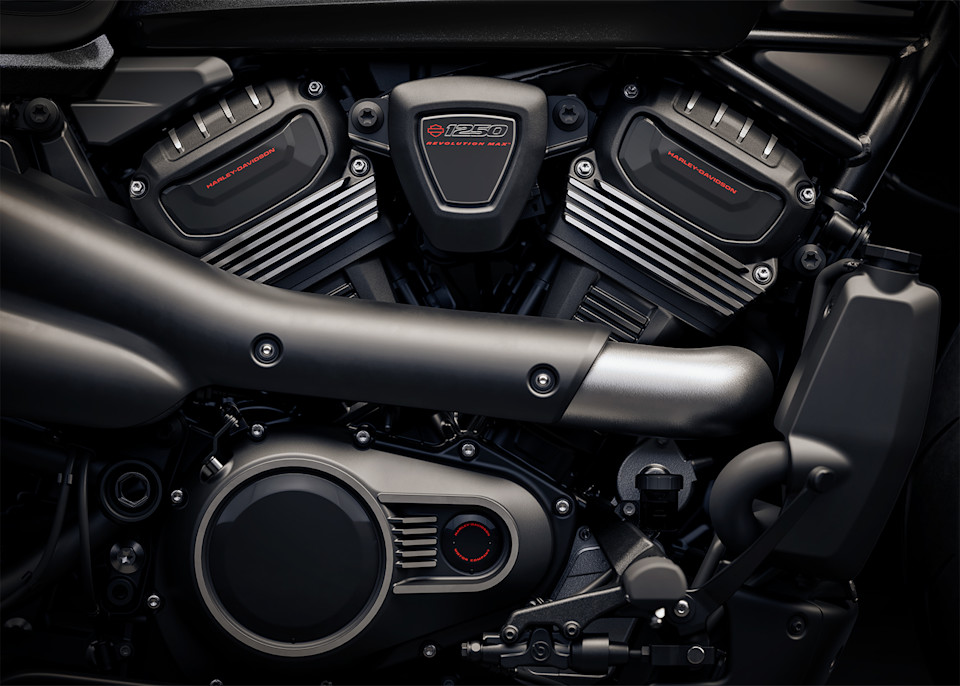
Powering the Sportster S is the liquid-cooled Revolution Max 1250T, an engine derived from the powerplant used in Harley-Davidson’s Pan America adventure motorcycle. However, its internal components and cylinder configuration have been extensively developed for the Sportster, giving it a distinct character and delivery.
The “T” stands for Torque, reflecting the development philosophy behind this engine. Rather than concentrating exclusively on maximum horsepower, Harley-Davidson focused on delivering a smoother, more substantial torque curve and strong performance throughout the rev range.
The 1,252 cc, 60-degree V-Twin features a 4.134-inch bore and a 2.846-inch stroke, together with a 12.0:1 compression ratio. Its electronic sequential port fuel injection system (ESPFI) ensures precise fuel delivery.
The engine produces:
- Maximum power: 121 hp (90 kW) at 7,500 rpm.
- Maximum torque: 93 ft-lb (approximately 126 Nm) at 6,000 rpm.
- Displacement: 76.4 cu in (1,252 cc).
- Compression ratio: 12.0:1.
For comparison, the Pan America produces 152 hp and 128 Nm of torque.
The exhaust system follows a 2-into-1-into-2 configuration, with a catalytic converter integrated into the muffler. The result is a different sound character from traditional air-cooled Harley-Davidson engines. The familiar deep, bass-heavy rumble has given way to a rougher, more aggressive exhaust note that better suits the motorcycle’s modern personality.
Plenty of Power, Significantly Less Weight
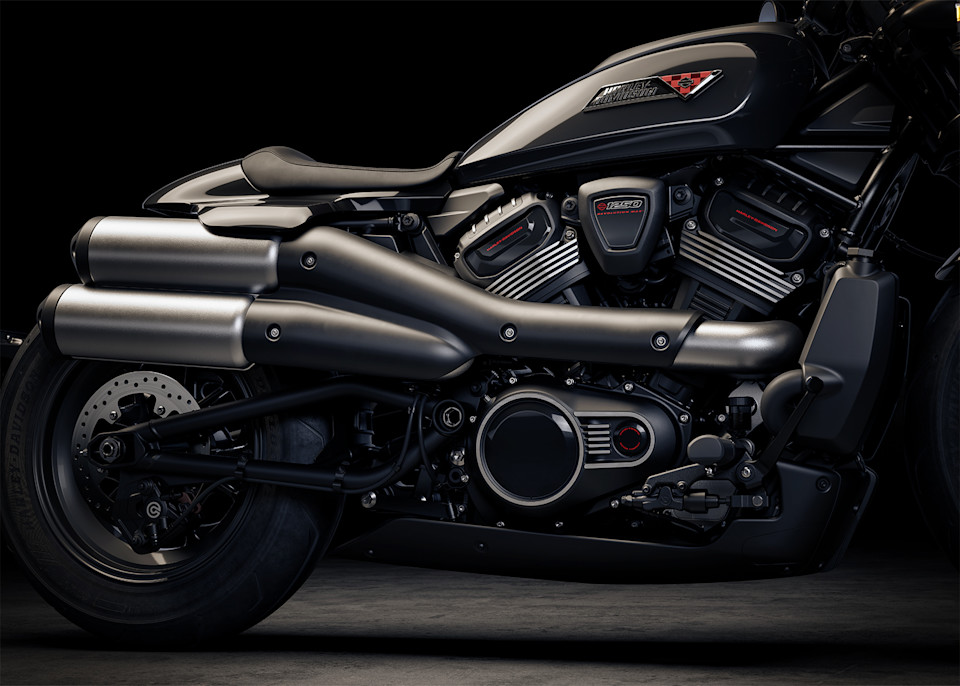
Anyone familiar with the previous Sportster 1200, with its 68 hp and 96 Nm of torque, will immediately appreciate how substantial the performance increase is.
Although 121 hp may not sound particularly extraordinary in a market where many motorcycles offer considerably more power, it represents a major step forward for Harley-Davidson.
Weight is equally important. The Sportster S weighs 502 lb (228 kg) in running order, making it considerably lighter than many traditional heavyweight cruisers.
The motorcycle has a wheelbase of 59.8 inches, an overall length of 89.4 inches and a width of 33.1 inches. Its seat height, measured under load, is 28.9 inches, while ground clearance stands at 3.5 inches.
The riding position and relatively compact dimensions give the Sportster S a distinctive stance, combining the proportions of a muscular cruiser with the more aggressive attitude of a modern performance motorcycle.
Fuel capacity is 3.1 gallons, while engine oil capacity, including the filter, is 4.75 quarts.
Six-Speed Transmission and Modern Electronics
Power reaches the rear wheel through a six-speed gearbox, replacing the five-speed transmission used in previous Sportster models.
The primary drive uses gears with a 49/89 ratio, while the overall gear ratios are as follows:
- First gear: 12.21
- Second gear: 9.022
- Third gear: 6.994
- Fourth gear: 5.641
- Fifth gear: 4.731
- Sixth gear: 4.131
The transmission is paired with a slipper clutch, which helps maintain stability and control during downshifts. Final drive is handled by Harley-Davidson’s belt system.
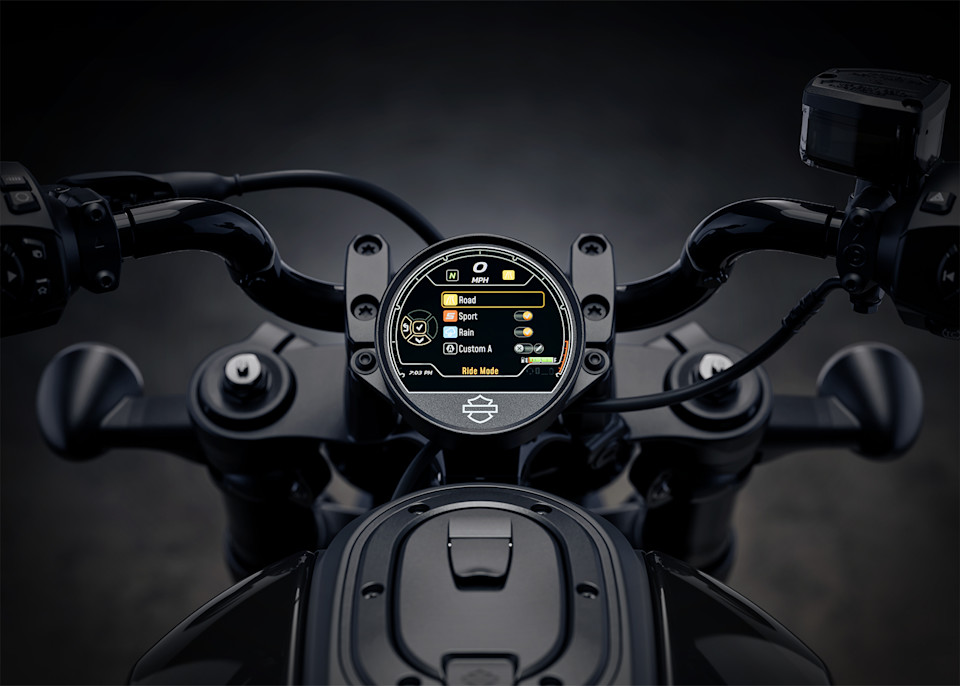
The electronic package includes several riding modes and advanced assistance systems designed to adapt the motorcycle’s behavior to different road and riding conditions.
The Sportster S also features lean-sensitive traction control and braking assistance, allowing its electronic systems to respond more accurately when the motorcycle is cornering.
Handling: More Agile Than Its Appearance Suggests
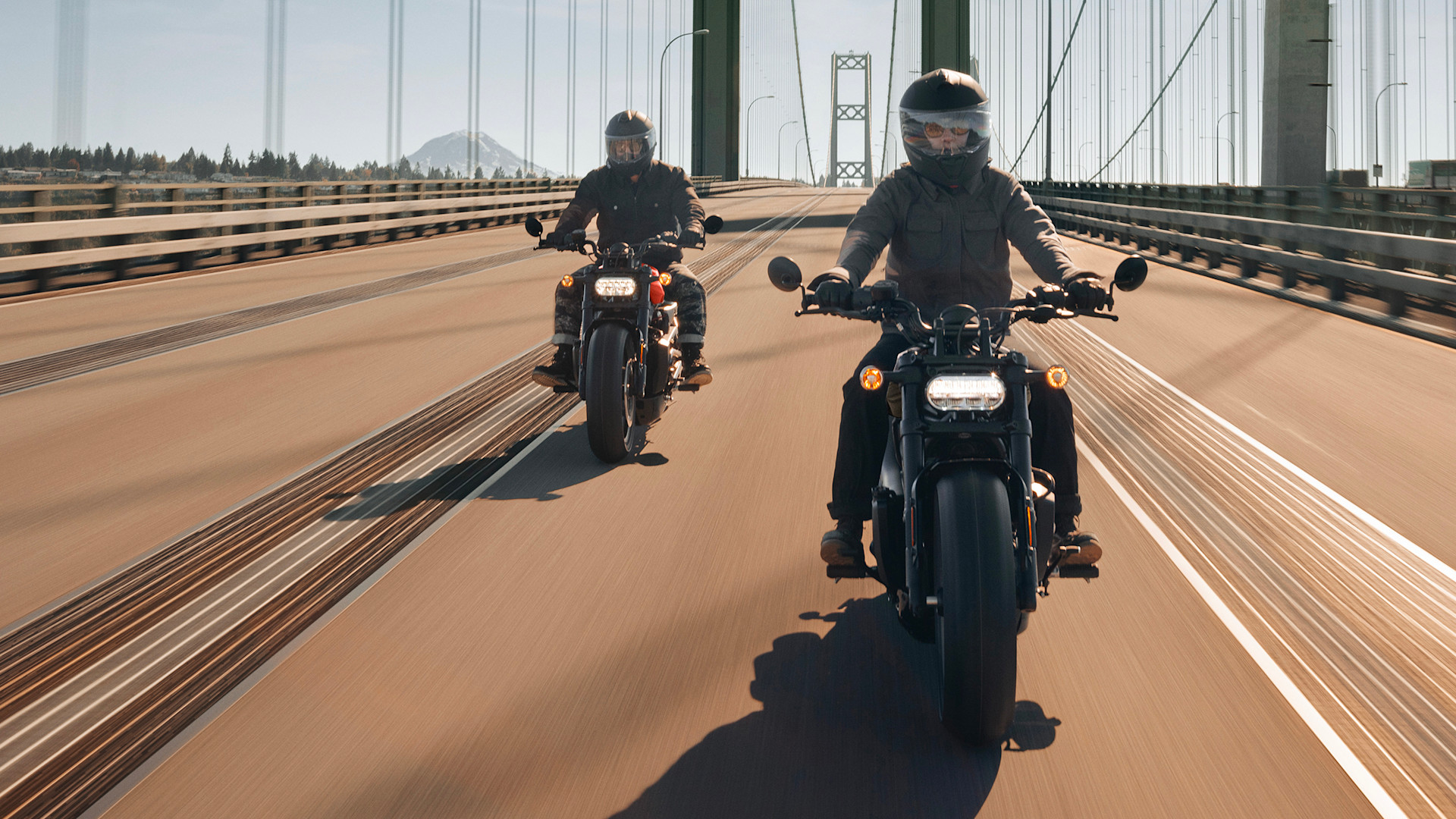
One of the most unusual features of the Sportster S is its exceptionally wide front tire. The motorcycle runs on a 160/70R17 73V front tire and a 180/70R16 77V rear tire, both developed as part of the Dunlop Harley-Davidson Series.
At first glance, such a large front tire might suggest compromised agility and slower steering response.
To address this, Harley-Davidson worked closely with Dunlop to develop a tire specifically for the Sportster S. Its relatively pointed profile towards the center helps improve responsiveness, despite its considerable width.
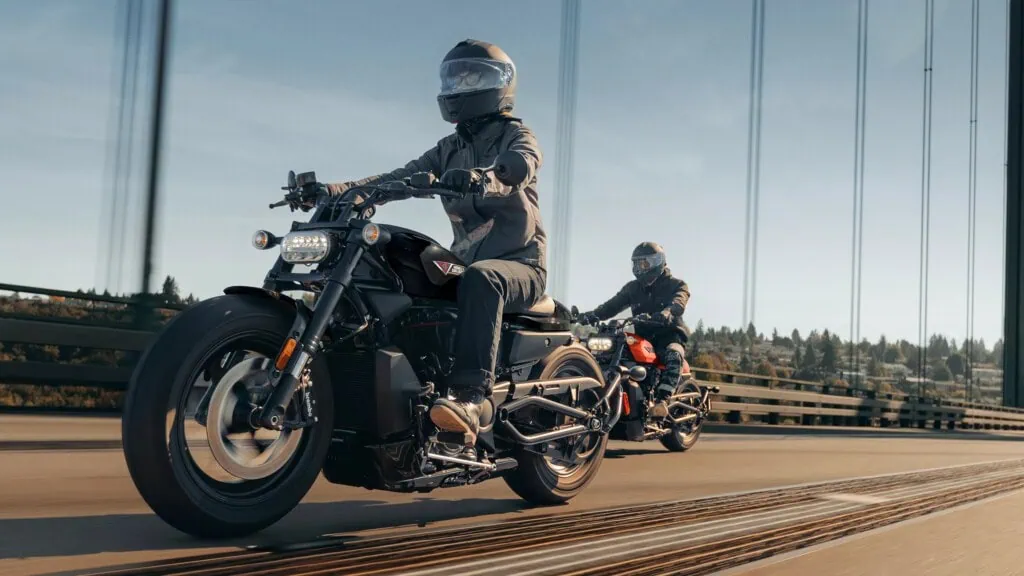
The combination provides balanced handling and allows the motorcycle to move confidently through both sweeping bends and tighter corners.
The chassis geometry includes a 30-degree rake, 5.8 inches of trail and a 59.8-inch wheelbase. Maximum lean angles are 35 degrees on both the left and right sides, defining the limits of its cornering capability.
Suspension: Adjustable Components and a Firm Character
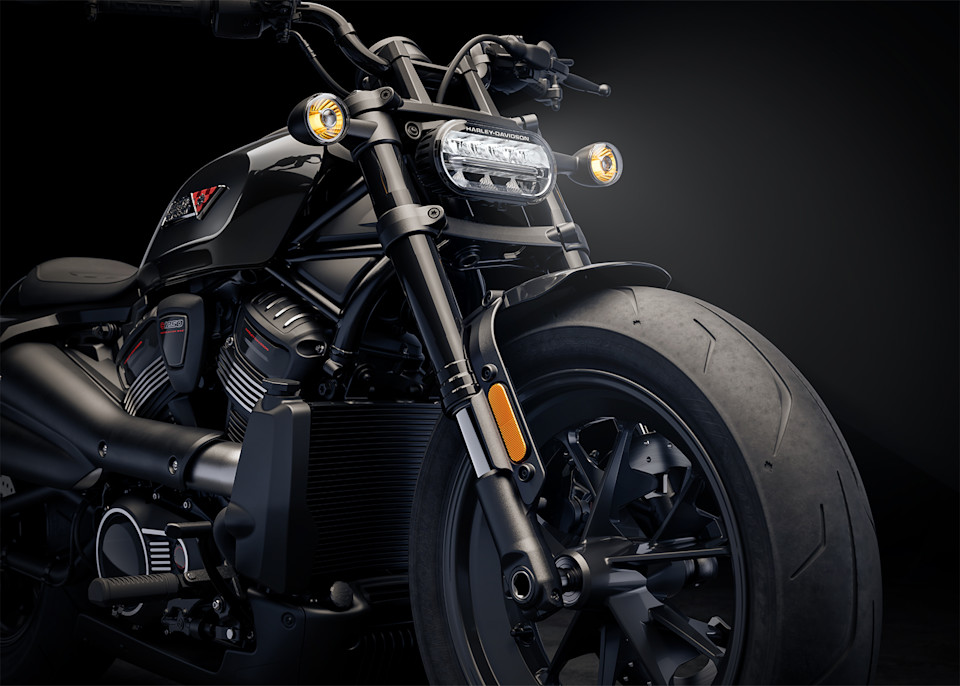
The suspension is where the Sportster S leaves some room for improvement, particularly on roads with poor surfaces.
At the front, it features a 43 mm inverted Showa fork with adjustable compression damping, rebound damping and spring preload. The fork is supported by aluminum triple clamps.
At the rear, a linkage-mounted piggyback monoshock provides adjustable compression, rebound and hydraulic spring preload.
Although the suspension offers a wide range of adjustment, its relatively firm characteristics can become noticeable on uneven roads. Potholes, manhole covers, cobblestones, road repairs and speed bumps are transmitted quite directly to the rider.
On smooth asphalt, however, the motorcycle feels considerably more composed. It maintains its line confidently and handles changes of direction with ease, even through demanding corners.
Brembo Brakes and Advanced Braking Assistance
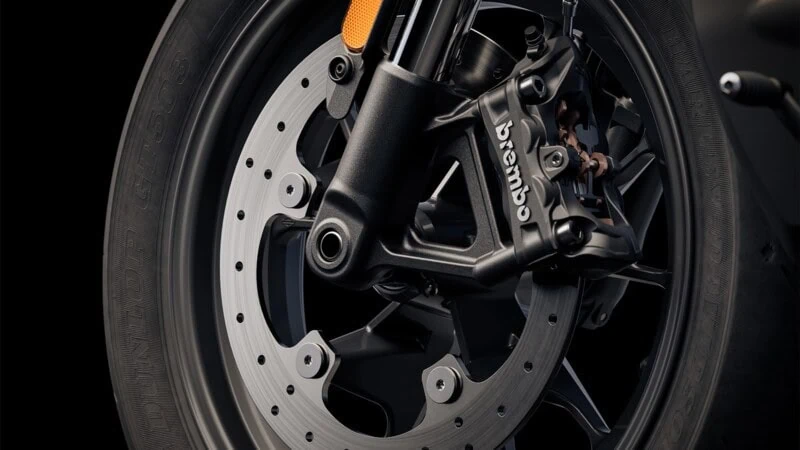
The braking system consists of a single floating front disc paired with a radially mounted four-piston Brembo Monobloc caliper.
At the rear, braking is handled by a solid rotor and a floating single-piston caliper.
Despite using only one front disc, braking performance is impressive. Lever feel is clear and progressive, with strong stopping power that builds smoothly rather than delivering an excessively aggressive initial bite.
The motorcycle is equipped with ABS, as well as Cornering Enhanced ABS (C-ABS), which takes the motorcycle’s lean angle into account when calculating the appropriate braking pressure.
This provides additional reassurance when braking while cornering, helping maintain stability and reduce the risk of wheel lock.
Rider Safety Enhancements: Technology Working in the Background
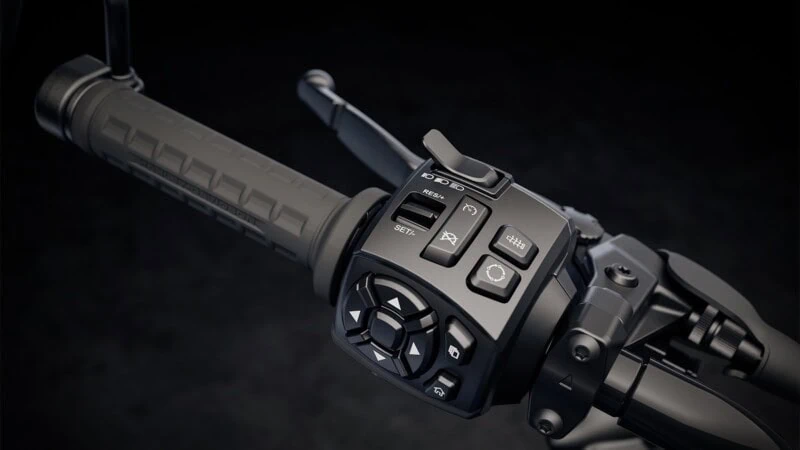
Harley-Davidson has equipped the Sportster S with its Rider Safety Enhancements package, a collection of electronic systems designed to improve stability, traction and control in unpredictable riding situations.
These technologies are particularly valuable when accelerating, braking or reducing speed on slippery surfaces. The cornering versions go a step further by taking the motorcycle’s lean angle into account.
The main systems include:
Anti-lock Braking System (ABS)
ABS prevents the wheels from locking under braking, helping the rider maintain control during sudden or emergency stops, particularly when braking in a straight line.
Traction Control System (TCS)
TCS monitors rear-wheel traction and reduces excessive wheelspin during acceleration. Its purpose is to maintain stability and give the rider greater confidence when applying power.
Drag-Torque Slip Control System (DSCS)
DSCS helps prevent excessive rear-wheel slip or locking caused by engine braking. This can occur during aggressive downshifts or when the throttle is suddenly closed, particularly on wet or slippery roads.
Tyre Pressure Monitoring System (TPMS)
TPMS continuously monitors tyre pressure and alerts the rider through the instrument display when pressure becomes too high or too low. Maintaining the correct pressure is essential for handling, safety and tyre longevity.
Wheel Lift Mitigation
This system helps keep both wheels in contact with the road during aggressive riding. Front-wheel lift mitigation manages engine torque to reduce unwanted wheelies during acceleration, while rear-wheel lift mitigation adjusts braking pressure to help prevent the rear wheel from lifting during hard braking.
Cornering Enhanced ABS (C-ABS)
Unlike conventional ABS, C-ABS takes the motorcycle’s lean angle into consideration when managing braking pressure. This allows the system to adapt its intervention to the motorcycle’s position while cornering.
Cornering Enhanced Traction Control (C-TCS)
C-TCS reduces excessive rear-wheel spin during acceleration, whether the motorcycle is travelling upright or leaning into a corner.
Cornering Drag-Torque Slip Control (C-DSCS)
This system helps maintain rear-wheel stability when the rider suddenly closes the throttle or downshifts. During cornering, it also adjusts its intervention according to the motorcycle’s lean angle.
Enhanced Lift Mitigation
Enhanced Lift Mitigation builds on conventional wheel-lift control by using information from the motorcycle’s Inertial Measurement Unit (IMU). This allows the system to make more precise adjustments and provide more accurate control during aggressive acceleration and braking.
Together, these systems create a comprehensive electronic safety package that works largely in the background, allowing the rider to concentrate on the road.
Wheels and Chassis
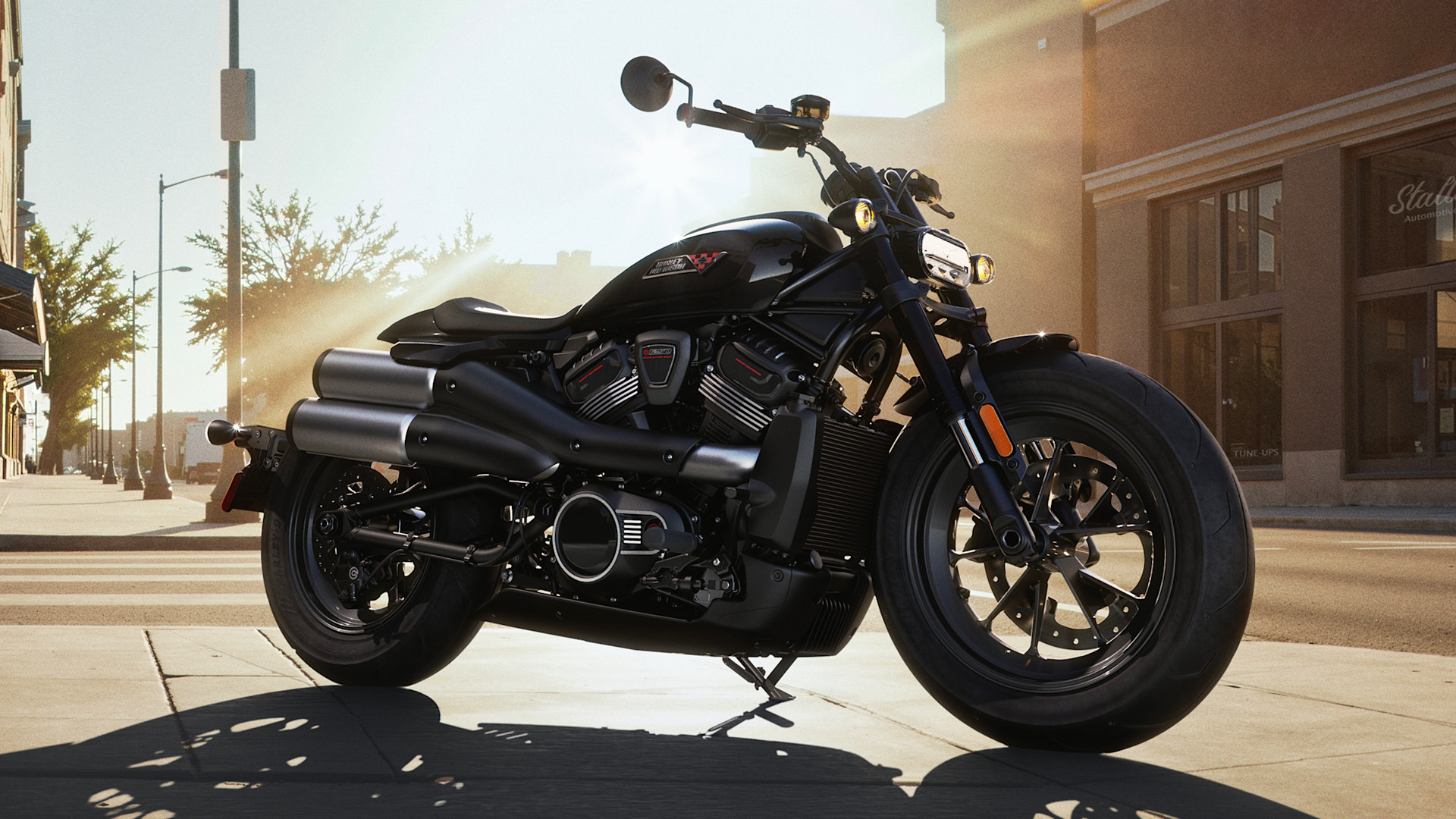
Both wheels are made from cast aluminium and feature a satin-black finish, complementing the motorcycle’s muscular styling.
The combination of the 17-inch front wheel and 16-inch rear wheel contributes to the Sportster S’s distinctive proportions.
The chassis is designed to balance the stability expected from a cruiser with the more responsive handling required for sporty riding. Its relatively short overall dimensions and carefully selected geometry help it remain manageable in different riding situations.
Lighting and Electrical Equipment
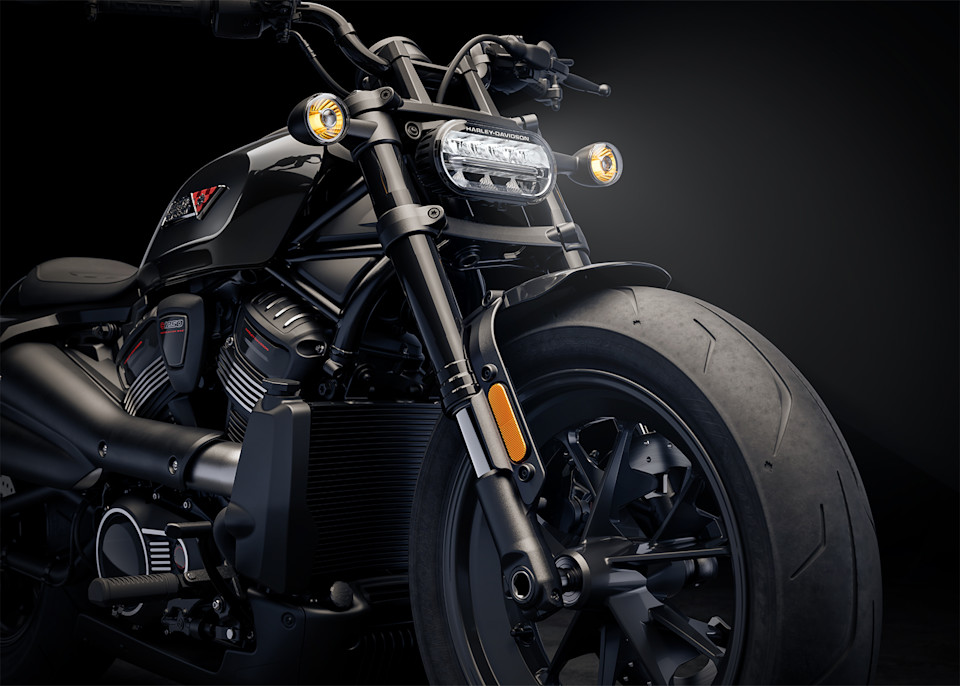
The lighting system uses LED technology throughout.
The front features a full-LED headlight with high and low beams, together with distinctive signature position lighting. At the rear, the tail and brake lights are also fully LED. The motorcycle is equipped with LED bullet-style front and rear turn signals, although lighting configurations may vary according to local regulations.
TFT Display, Connectivity and Infotainment
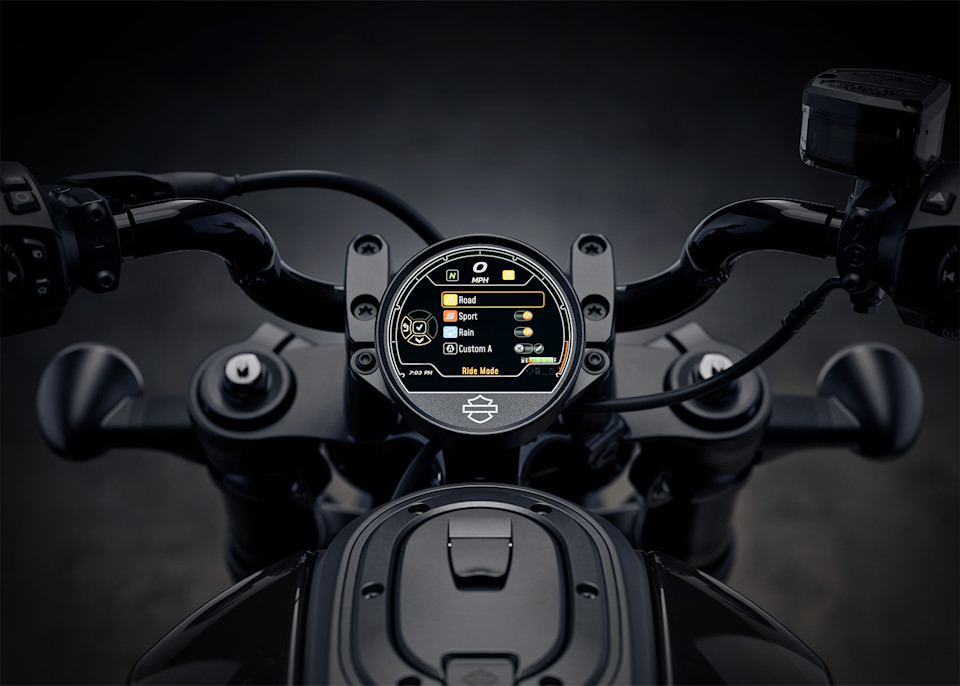
Technology plays an important role in the Sportster S, particularly through its modern instrument cluster.
The motorcycle features a four-inch colour TFT display with a wide range of information, including:
- Speedometer and tachometer indication.
- Selected gear.
- Odometer and trip information.
- Fuel level and estimated remaining range.
- Clock and ambient temperature.
- Low-temperature warning.
- Side-stand warning.
- Tip-over warning.
- Cruise control information.
The display also provides access to additional vehicle information, including engine temperature, oil pressure, battery voltage and tire pressure monitoring. Bluetooth connectivity allows riders to pair their smartphones and access phone calls, music and navigation through the Harley-Davidson application.
The system supports hands-free mobile phone functionality, while voice recognition and certain media and navigation features depend on the connected smartphone. Bluetooth headset connectivity is also available, with rider and passenger intercom functionality supported through compatible headsets. The interface supports multiple languages, including English, German, Greek, French, Italian, Spanish, Japanese, Chinese and many others. A USB-C connection provides charging and instrument-system update functionality, with a 5V, 3A output.
Performance and Fuel Economy
The Sportster S combines its powerful Revolution Max engine with a relatively lightweight construction and modern electronic assistance. According to Harley-Davidson’s published specifications, the engine delivers 121 hp at 7,500 rpm and 93 ft-lb of torque at 6,000 rpm, with torque measurements following the J1349 testing method.
The estimated fuel economy is 49 mpg, based on the manufacturer’s published city/highway estimate. These figures demonstrate that the Sportster S is designed not only to offer strong acceleration and impressive performance, but also to provide a balance between everyday usability and sporting ability.
First Test: A Positive Experience with Some Reservations
Our first ride covered almost 150 kilometers, mainly through urban areas, with a shorter section on country roads. Overall, the Sportster S left a very positive impression. The new engine delivers performance worthy of the Sportster name while the reduced weight modern chassis and electronic systems significantly improve the motorcycle’s capabilities. Harley-Davidson has managed to create a model that retains elements of its traditional identity while appealing to riders looking for greater power, improved performance and a more sporting riding experience.
The main area requiring further development is suspension tuning. Its firm characteristics become particularly noticeable on uneven roads and have an impact on overall comfort. Nevertheless, the adjustable front and rear suspension components offer some scope for improvement through careful fine-tuning.
The Sportster Family Is Expected to Grow
The Sportster S appears to be only the beginning of a new generation of Harley-Davidson motorcycles.
Expectations are high for future variants featuring different styling, ergonomics, suspension configurations and performance characteristics.One particularly interesting reference point is the Bronx, a roadster concept unveiled at EICMA 2019 before subsequently disappearing from the spotlight.
The proposed model was designed around a smaller Revolution Max engine with a displacement of 975 cc, potentially opening the door to a more performance-oriented motorcycle with a different character.
One thing is clear: the Sportster S represents a major turning point for Harley-Davidson. It is not simply an updated version of an existing model, but an entirely new motorcycle that combines the brand’s unmistakable American identity with the technology and performance expected from a modern motorcycle.